diverticulitis
September 16, 2012
Benefits Chart
Just got this in my email and thought I would share it. Hope you enjoy!


September 13, 2012
Vegan
Well, I'm officially going vegan. I am cutting eggs and yogurt from my diet starting today. Since I'm still a smoker (trying to quit, not working) I don't need the cholesterol in the eggs, and I can do without yogurt. I allow myself only two occasions to cheat on my lifestyle/diet: weddings, and mom's homemade chicken soup when I'm sick. I will also go back to eggs if I ever get a place where I can have chickens, raise them myself, collect the eggs, and let them live out long, happy lives.
September 5, 2012
What supplements do I take?
Supplements are, as a rule, an addition to a healthy lifestyle. They are intended to give you what you do not get enough of, or in some cases, cannot get. I take B12, probiotics and Omega 3.6.9 supplements now that I don't eat animal products, D3 since I don't go outside often (and especially during the winter), and a multivitamin and calcium-magnesium mix that isn't included in the multivitamin, and chlorella and/or chlorophyll supplements because the quality of fruits and veggies is not spectacular nowadays. That's seven different supplements, and I'm adding astaxanthin soon. (I also take bio plasma every once in a while out of curiosity, and echinacea when I'm sick.)

I use this as a general rule: Dr. Oz's Supplement Guide
The brands I use are Vitacost Synergy Once-Daily multivitamin, Vitacost Yaeyama Chlorella, Vitacost Ultra Calcium-Magnesium, and Vitacost vegetarian Omega 3.6.9. (Vitacost is just so easy for me to use, as they have my rice brand, Lotus Foods, my bean brand, Eden Foods, and several other awesome products.) I chose my multivitamin because it has no calcium and magnesium, giving me the option to take that separately, and it has coQ10, ALA, B12 and Quercetin. It also has at least 100% the daily value needed for each vitamin or mineral, but no excessive amounts of any.
However, other than the few things I don't have a taste for (peaches, pistachios, limes, apricots, and ginger to name most) I eat healthier than anyone I know personally. I just don't eat all those good things when I'm supposed to, and those things may not always be organic or fresh. Smoothies are juices are one way to try to get enough vitamins and minerals, but I, like most people, don't make them regularly enough.
August 31, 2012
What I eat on average

Might I just say that everyone has different nutritional needs, and everyone's body responds differently to certain foods. I might try to push nuts and watermelon on my mom, but when she says it comes up on her, I stop trying to force it on her. (After a few trys, always asking "Are you sure you tried it before?") Granted, that's because I believe some foods need to grow on you. I don't recall my first encounter with peas to be very pleasant, but now you'll find me tossing them in pasta. I don't recall liking chickpeas immediately, but now I can't get enough of them. But other times, there are just some things you don't want. Or need. For example, you can get a selection of vitamins and minerals from carrots, but if carrots aren't your thing you can get what you need from eating other things. As long as you're actually eating those other things, and not avoiding the whole category. So here's what you need on a daily/every-other-day basis...
1. A small amount of nuts and seeds
2. Whole grains (this does not mean whole grain bread, it means a wide variety of different whole grains, such as farro, wheatberries, red/white/black/brown rice, amaranth, quinoa, couscous, etc)
3. Leafy green veggies (not just lettuce - collard greens, kale, swiss chard, turnip greens, spinach, mustard greens, cabbage and dandelion greens)
4. Cruciferous veggies (like cauliflower) and those that fall into the "other" category like garlic and onion
5. Fruits
6. Beans
I'll admit, I have a really hard time working nuts into my diet at all, much less daily. I prefer coconut and rice milk over nut milk, and peanut butter over raw nuts. I do pretty well with fruit, usually only having a cup or less per day, and I do very well with the cruciferous veggies and "other" category. I eat plenty of whole grains, sweet potatoes, carrots, onions, peppers, kale, beans (chickpeas!), potatoes and garlic. Although I could always use more garlic. Thanks Montel Williams.
However, I get stuck in little obsessions, where I eat one thing in particular for a whole week, such as pasta with carrots or cauliflower mashed potatoes. This week it's been pineapple coconut smoothies. And I don't usually make many smoothies and juices, which are really great in the morning. And for people who eat every type of leafy green, fruit or veggie, that's great. But I don't like apricots, peaches, ginger, orange cauliflower or black beans.

August 29, 2012
Baked Chickpeas
Two ingredients. Very delicious.

Bake [rinsed] chickpeas in olive oil and Italian spices at 350 for 15 minutes.
Soup & Peanut Butter Cups
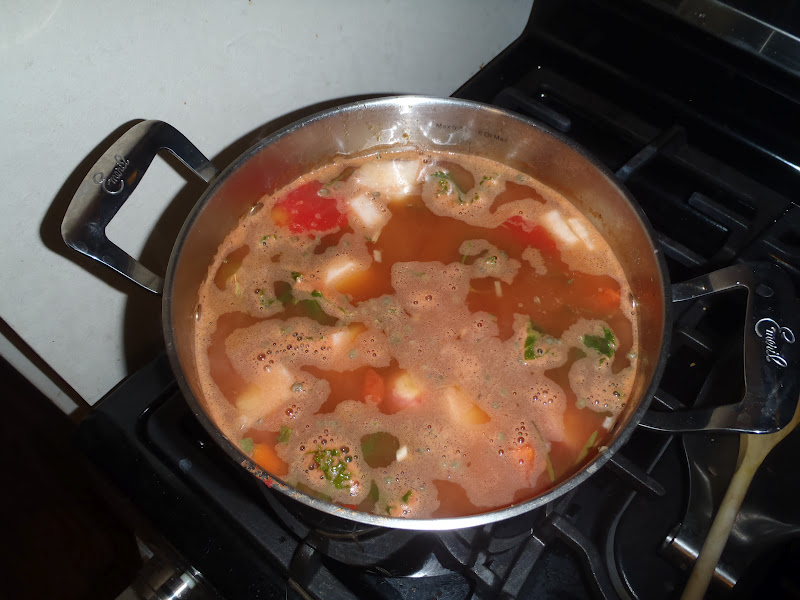
Here's a picture of some soup I made today, using up what I had in the fridge. It has a base of vegetable bouillon cubes and tomato paste, and I put in four medium potatoes, a head of kale, half a bag of baby carrots, four red radishes, half a daikon radish, French green lentils, one can of white kidney beans, garlic, onion spice, fresh rosemary and purple basil, plus a dry leek/scallion/shallot mix. Turned out alright.


I also made some "two ingredient" peanut butter cups using all-natural peanut butter and Sander's dark chocolate fudge (which, by the way, was the only thing in the toppings aisle that didn't have high fructose corn syrup). I lined a muffin pan with cups and filled them with half peanut butter, half fudge topping, then froze them overnight. A little sticky, and they didn't freeze the whole way, so next time I plan on lining the cups with powdered sugar.

They should have turned out like these below, but I'm pretty sure this person used cake frosting.


I also made some "two ingredient" peanut butter cups using all-natural peanut butter and Sander's dark chocolate fudge (which, by the way, was the only thing in the toppings aisle that didn't have high fructose corn syrup). I lined a muffin pan with cups and filled them with half peanut butter, half fudge topping, then froze them overnight. A little sticky, and they didn't freeze the whole way, so next time I plan on lining the cups with powdered sugar.


August 21, 2012
Lunches
Found this on Pinterest, hope it inspires you to bring a healthy lunch to work or pack something similar for your kids. There's endless options - carrots, boiled egg, salad with those tiny dressing packets, sandwiches, jello, cucumbers, berries, an apple or orange, apple sauce, muffins, etc.


Subscribe to:
Posts (Atom)